
What Is an Orthopedic Hohmann Retractor and How Is It Used?
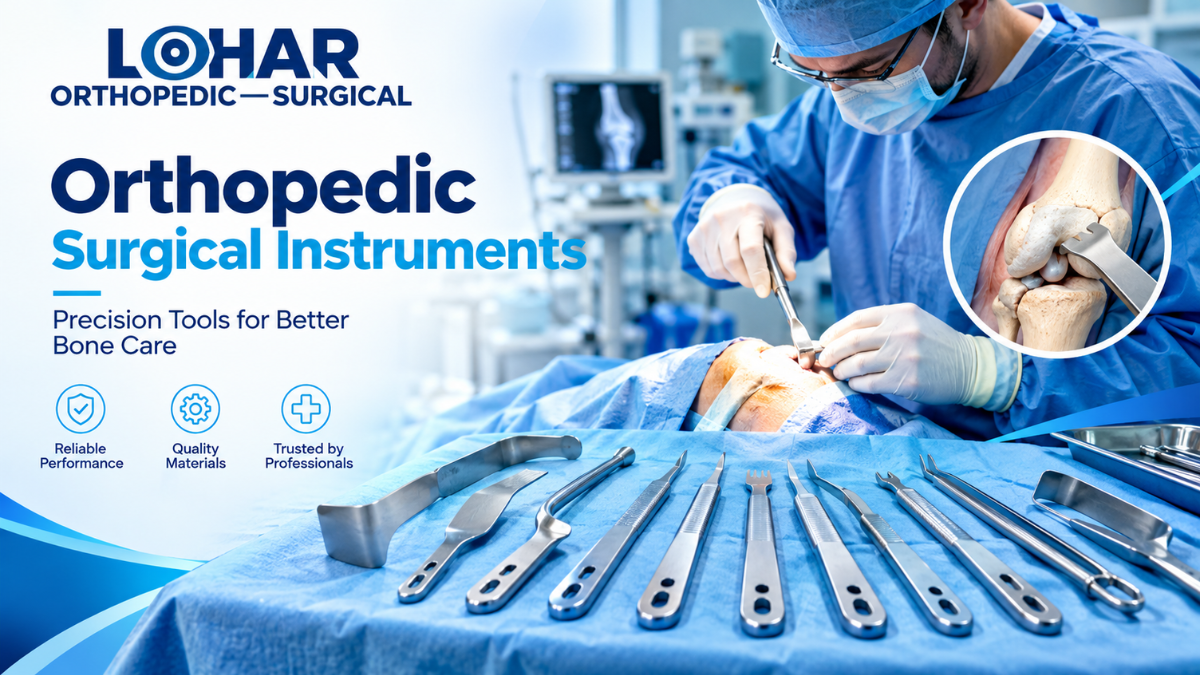
An Orthopedic Hohmann Retractor is a specialized orthopedic surgical instrument designed to provide controlled retraction of soft tissues and improve access to bones during orthopedic procedures. It features a long shaft and a broad, curved or angled blade that can be positioned around or against bone while helping keep surrounding tissues away from the surgical field.
The design of the Hohmann retractor is particularly useful when surgeons need clear exposure of a specific bone or operative area. The blade is placed against the bone and the handle provides controlled leverage, allowing the surgeon or assistant to retract soft tissue and maintain visibility during procedures. Different blade widths, lengths, and tip configurations are available for different surgical applications.
The Hohmann retractor is commonly associated with orthopedic and bone surgery, including procedures involving the long bones, joints, and other areas where controlled tissue retraction is required. Its simple mechanical design makes it a practical component of many orthopedic surgical instrument sets.
For orthopedic surgeons, hospitals, surgical centers, medical-instrument distributors, and procurement teams, understanding the design and available configurations of a Hohmann retractor is important when selecting the appropriate instrument for a particular procedure.
This article explains what an Orthopedic Hohmann Retractor is, its design, general function, common types, surgical applications, available sizes, materials, quality considerations, maintenance requirements, and what buyers should check before purchasing one.
What Is a Orthopedic Hohmann Retractor?
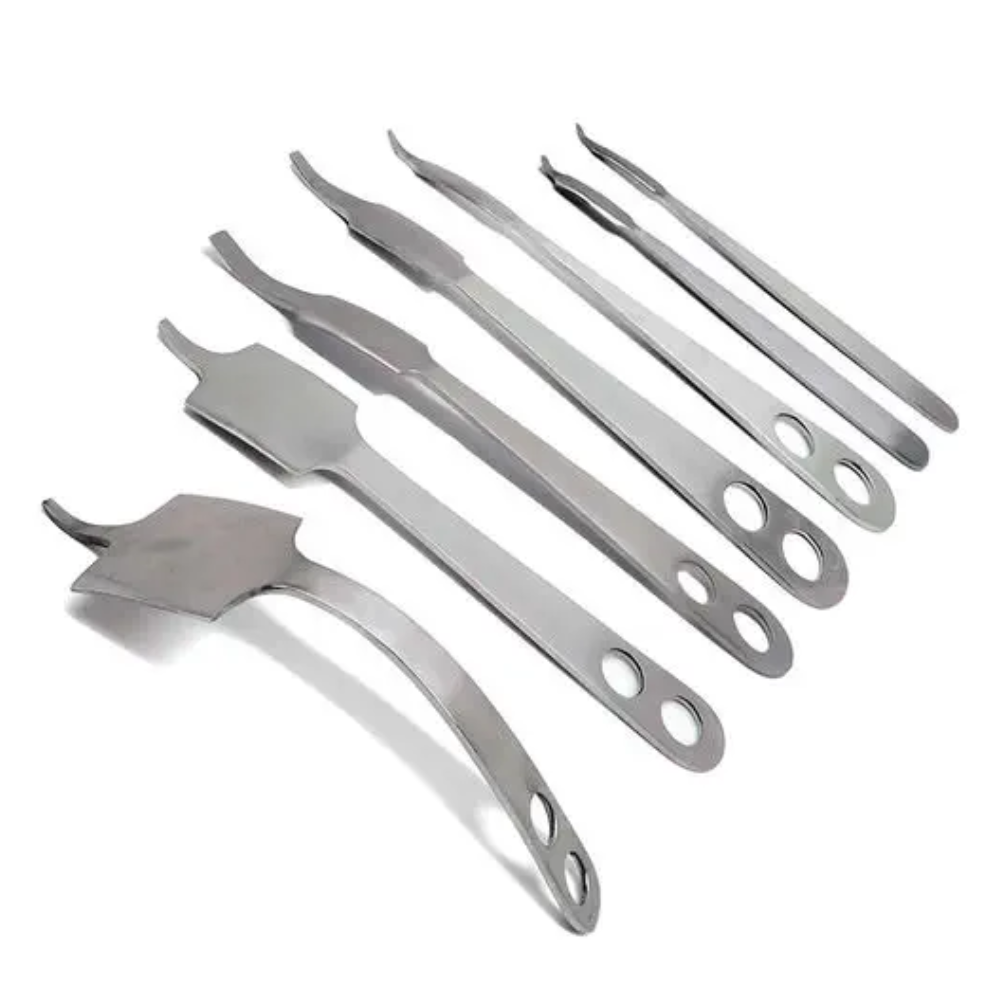
An Orthopedic Hohmann Retractor is a specialized surgical instrument designed to provide controlled retraction of soft tissues and improve access to bone during orthopedic procedures. Its characteristic long shaft and curved or angled blade allow the instrument to be positioned around a bone or against a bony surface while helping keep surrounding tissues away from the operative field.
The Hohmann retractor is widely associated with orthopedic surgery because its design provides useful exposure during procedures involving bones and joints. Depending on the specific pattern, Hohmann retractors are available with different blade shapes, widths, lengths, and tip configurations to accommodate different surgical requirements.
For orthopedic surgeons, hospitals, surgical centers, medical-instrument distributors, and procurement teams, understanding the design and application of a Hohmann retractor is important when selecting instruments for orthopedic surgical sets.
This article explains what an Orthopedic Hohmann Retractor is, what it is used for, how it works, its main parts, common types, sizes, materials, quality considerations, maintenance requirements, and what buyers should check before purchasing one.
What Is an Orthopedic Hohmann Retractor?
An Orthopedic Hohmann Retractor is a hand-held surgical retractor used primarily to provide exposure of bone during orthopedic procedures. It generally consists of a handle or shaft connected to a curved, angled, or slightly hooked blade.
The blade can be positioned against or around the bone, allowing the surgeon or surgical assistant to retract soft tissue away from the operative area.
Unlike general-purpose retractors designed primarily for broad tissue exposure, Hohmann retractors are specifically associated with orthopedic and bone-related surgical applications.
The exact shape and dimensions vary between manufacturers and models.
What Is a Hohmann Retractor Used For?
The primary purpose of a Hohmann retractor is to provide controlled tissue retraction and bone exposure during orthopedic surgery.
It can be used in procedures where the surgeon needs improved visualization of a bone or joint while maintaining separation between the surgical site and surrounding soft tissues.
Common applications may include:
- Orthopedic bone surgery
- Joint surgery
- Fracture-related procedures
- Bone exposure during fixation procedures
- Reconstructive orthopedic procedures
- Procedures involving long bones
- General orthopedic surgical approaches
The exact application depends on the retractor design, blade configuration, surgical approach, and procedure being performed.
How Does a Hohmann Retractor Work?
The Hohmann retractor works through a simple mechanical principle.
The blade is positioned against or around the selected area of bone, while the handle provides the surgeon with control over the instrument.
Conceptually, its function can be understood as:
Handle → Shaft → Curved/Angled Blade → Tissue Retraction
The blade provides a contact surface for maintaining soft-tissue displacement and improving access to the underlying bone.
Different blade configurations can provide different levels of exposure depending on the surgical requirement.
The instrument should be handled by appropriately trained surgical professionals and used according to accepted surgical techniques and the manufacturer’s instructions.
Main Parts of a Hohmann Retractor
1. Handle or Shaft
The shaft connects the working blade to the area held by the surgeon or assistant.
A properly manufactured shaft should provide:
- Secure construction
- Appropriate rigidity
- Smooth handling
- Consistent dimensions
- Reliable mechanical strength
The exact shaft shape can vary according to the Hohmann retractor pattern.
2. Retractor Blade
The blade is the primary working portion of the instrument.
Its purpose is to provide a surface for retracting soft tissue and improving access to the operative area.
Blade characteristics can include:
- Blade width
- Blade length
- Curvature
- Angle
- Tip configuration
- Overall profile
The appropriate blade configuration depends on the surgical application.
3. Curved or Angled Tip
Many Hohmann patterns feature a curved or angled working end.
This design can allow the instrument to be positioned around a bone or placed against a specific bony surface.
The precise shape is model-dependent and should be confirmed from the manufacturer’s specifications.
Hohmann Retractor Types
Hohmann retractors are available in different configurations to accommodate different orthopedic procedures.
Common variations may differ in:
Blade Width
Narrow blades can be useful where more localized access is required, while broader blades may provide a larger contact area.
Blade Length
Different blade lengths can provide different depths of access.
Blade Shape
The working end may be straight, curved, angled, or otherwise shaped according to the specific instrument pattern.
Shaft Length
Longer shafts may be selected for procedures requiring greater working depth.
Tip Configuration
The tip may vary according to the intended orthopedic application.
Because manufacturers can use different naming conventions, buyers should always check the actual dimensions and product photographs rather than relying only on the instrument name.
Hohmann Retractor Size and Dimensions
Hohmann retractors are manufactured in different sizes and configurations.
Specifications can include:
- Overall length
- Blade length
- Blade width
- Blade depth
- Shaft dimensions
- Tip configuration
- Overall weight
There is no single universal Hohmann retractor size.
A professional product specification should identify the exact:
Manufacturer + model + catalog number + dimensions
This helps hospitals, distributors, and procurement teams distinguish between different Hohmann patterns.
Materials Used in Hohmann Retractors
Reusable orthopedic retractors are commonly manufactured from stainless steel or other corrosion-resistant surgical metals.
Important material considerations can include:
- Mechanical strength
- Corrosion resistance
- Surface finish
- Dimensional stability
- Durability
- Suitability for repeated reprocessing
However, the term “stainless steel” by itself does not identify a particular steel grade.
If a buyer requires a specific material grade, the information should be confirmed through the manufacturer’s technical documentation.
What Makes a Good Hohmann Retractor?
Because a Hohmann retractor is used for controlled tissue retraction and bone exposure, manufacturing precision is important.
Important quality characteristics include:
Accurate Blade Shape
The blade should correspond consistently to the intended product design.
Smooth Edges and Finish
The instrument should have an appropriate surface finish and should be free from unnecessary roughness or manufacturing defects.
Secure Shaft Construction
The shaft and blade should be securely manufactured as specified for the particular model.
Appropriate Rigidity
The instrument should provide the mechanical characteristics intended for its surgical application.
Accurate Dimensions
The physical instrument should correspond to the published product specifications.
Consistent Manufacturing
Dimensions, blade shape, finish, and overall construction should remain consistent between instruments of the same model.
How to Choose an Orthopedic Hohmann Retractor
Orthopedic hospitals, surgical centers, distributors, and procurement teams should consider several factors before purchasing a Hohmann retractor.
1. Confirm the Instrument Pattern
Make sure the product is actually the required Hohmann retractor pattern.
2. Check the Overall Length
Verify the exact overall length according to the manufacturer’s specification.
3. Review the Blade Dimensions
Check the blade width, length, depth, and shape.
4. Examine the Blade Configuration
Confirm whether the instrument has the required curved, angled, or other specified blade design.
5. Confirm the Material
Review the manufacturer’s material information.
6. Verify Reusability
Confirm whether the instrument is intended for repeated clinical use.
7. Check the Manufacturer Reference
A professional instrument should have a clear product reference or catalog number.
8. Review Technical Documentation
Depending on the purchasing environment, buyers may require information regarding material, dimensions, reprocessing, packaging, and product identification.
Hohmann Retractor Specification Checklist
| Specification | What to Verify |
|---|---|
| Instrument name | Orthopedic Hohmann Retractor |
| Instrument category | Orthopedic surgical retractor |
| Intended application | Orthopedic surgery |
| Overall length | Exact manufacturer measurement |
| Blade length | Product-specific measurement |
| Blade width | Product-specific measurement |
| Blade shape | Curved/angled or specified configuration |
| Tip configuration | Product-specific design |
| Material | Documented material |
| Reusability | Reusable or single-use |
| Manufacturer | Company identification |
| Catalog number | Exact reference |
| Surface finish | Product specification |
| Reprocessing | Manufacturer instructions |
| Packaging | Product-specific information |
Reusable Hohmann Retractors
Many Hohmann retractors are designed as reusable orthopedic surgical instruments.
Because reusable instruments are repeatedly handled and reprocessed, regular inspection is important.
General inspection considerations include:
- Blade condition
- Blade alignment
- Shaft condition
- Surface finish
- Corrosion
- Structural damage
- Manufacturing defects
- Overall mechanical integrity
The exact cleaning, sterilization, and reprocessing requirements should always come from the manufacturer.
A universal reprocessing procedure should not be assumed for every Hohmann retractor model.
Care and Maintenance
Reusable orthopedic surgical instruments should be maintained according to the manufacturer’s instructions and the surgical facility’s established instrument-reprocessing procedures.
General inspection can include checking:
- Retractor blade
- Tip and edges
- Shaft
- Handle
- Surface finish
- Signs of corrosion
- Structural condition
- Overall cleanliness
If an instrument is damaged, excessively worn, or otherwise not functioning according to its specification, it should be removed from service and evaluated according to the facility’s instrument-management procedures.
Why the Hohmann Retractor Design Matters
The Hohmann retractor is an important example of an orthopedic instrument designed specifically around controlled tissue retraction and bone exposure.
Its long shaft and working blade allow the instrument to be positioned at the surgical site while helping maintain access to the underlying bone.
The availability of different blade widths, lengths, curves, and tip configurations allows surgeons and instrument suppliers to select a pattern appropriate for a particular surgical requirement.
For this reason, the Hohmann name should not be treated as representing only one universal configuration. The exact dimensions and design should always be confirmed from the individual product specification.
Frequently Asked Questions
What is an Orthopedic Hohmann Retractor?
An Orthopedic Hohmann Retractor is a hand-held surgical instrument used primarily to retract soft tissue and improve exposure of bone during orthopedic procedures.
What is a Hohmann Retractor used for?
It is generally used for controlled soft-tissue retraction and bone exposure during orthopedic and bone-related surgical procedures.
What makes a Hohmann Retractor different?
Its characteristic long shaft and curved or angled blade allow it to be positioned around or against a bony surface for controlled retraction.
What sizes do Hohmann Retractors come in?
Sizes vary according to the manufacturer and model. Overall length, blade width, blade length, and blade configuration should be confirmed from the specific product specification.
What are Hohmann Retractors made from?
Reusable models are commonly manufactured from stainless steel or other corrosion-resistant surgical metals. The exact material grade should be confirmed with the manufacturer.
Are Hohmann Retractors reusable?
Many Hohmann retractors are designed as reusable surgical instruments. Reprocessing requirements depend on the specific model and manufacturer’s instructions.
What should I check before buying a Hohmann Retractor?
Check the instrument pattern, overall length, blade dimensions, blade shape, material, manufacturer, catalog number, reusability, and technical documentation.
How should a Hohmann Retractor be maintained?
It should be inspected and reprocessed according to the manufacturer’s instructions and the healthcare facility’s established procedures.
Conclusion
The Orthopedic Hohmann Retractor is a specialized surgical instrument primarily used for soft-tissue retraction and bone exposure during orthopedic procedures.
Its characteristic blade and shaft design allows controlled positioning around or against bone, helping provide access and visibility within the operative field. Different Hohmann configurations are available with variations in blade width, blade length, shaft length, curvature, and tip design.
For hospitals, orthopedic surgeons, surgical centers, distributors, and procurement teams, selecting the correct Hohmann retractor involves more than checking the instrument name. Important considerations include blade design, dimensions, material, manufacturer, catalog number, reusability, surface finish, and technical documentation.
The exact surgical application and handling should always be determined by qualified surgical professionals using appropriate clinical protocols and manufacturer guidance.
https://loharorthopedic.com/product-category/orthopaedic-instruments

About author


Add comment